Delivery
On-Campus
Interested in joining a forward-thinking community at the intersection of biology, chemistry, mathematics, statistics, computing, informatics and engineering? The M.S. in Bioinformatics program at Charlotte strives to empower ambitious individuals with the skills to develop, evaluate and deploy cutting-edge bioinformatics applications. At Charlotte you will prepare for a thriving career in the biotechnology sector, where the demand for life scientists with quantitative and computational expertise is rapidly growing.
Find out more about graduate education at UNC Charlotte by requesting information and attending an upcoming information session.
Your future is calling. Embrace this opportunity to advance your academic journey by starting your application today.
A unique master’s degree merging the biological sciences and computer technology, the M.S. in Bioinformatics is an interdisciplinary program at the intersection of the disciplines of Biology, Chemistry, Mathematics and Statistics, Computing and Informatics, and Engineering. The M.S. program is structured to provide students with the skills and knowledge to develop, evaluate, and deploy bioinformatics and computational biology applications.
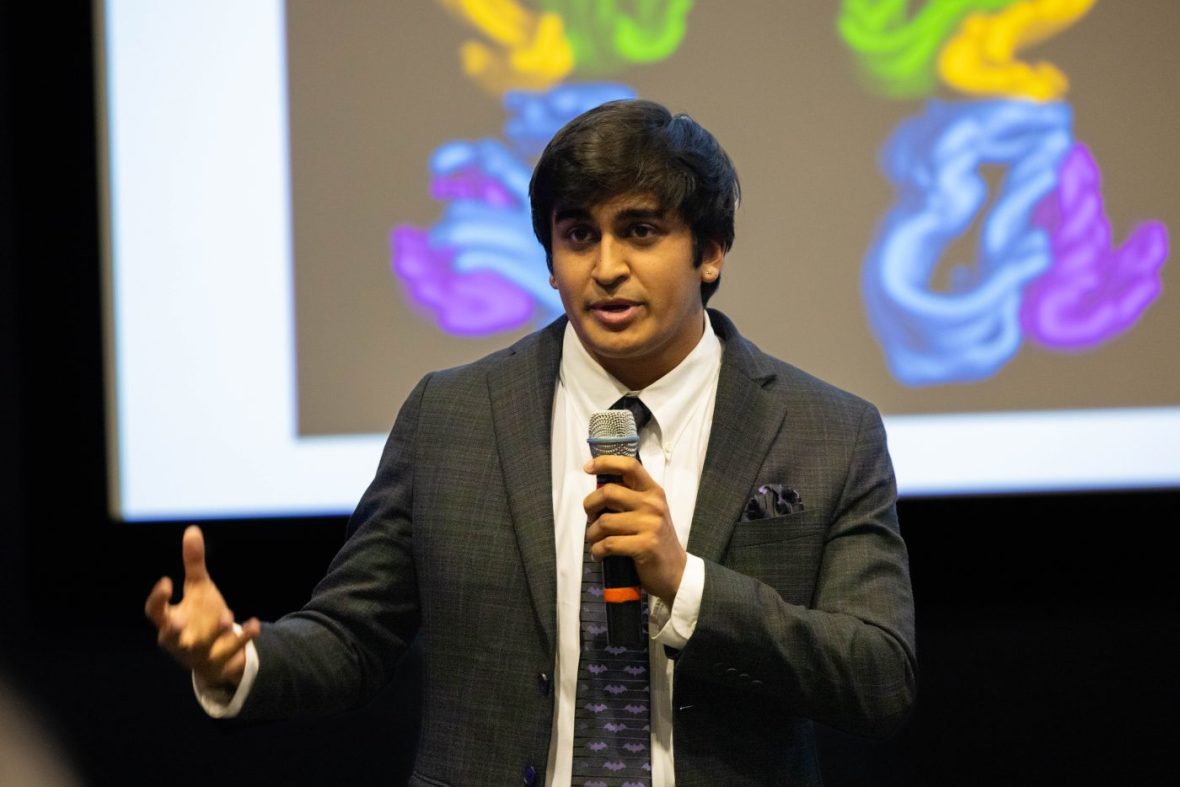
Juan Bolanos, M.S. Bioinformatics Student
| Applicant types | fall admissions | spring admissions |
|---|---|---|
| Priority Decision | March 1 | October 1 |
| Regular Decision | August 1 | December 1 |
| International Students | March 1 | October 1 |
*Application deadline to be nominated for a Graduate School Grant award is March 15th
In addition to the general requirements for admission to the Graduate School, the following are required for study toward a Master’s of Science in Bioinformatics: Under most circumstances, students admitted to the program will have:
**For International Applicants**
Core Courses
All students must take the 16 credits of core courses (BINF 6200, BINF 6101, BINF 6112, BINF 6211, BINF 6201, BINF 6115, and a core elective). Students who have previously taken a course with a syllabus that closely follows one of the Core Courses may then substitute an advanced elective for the required Core Course. This is up to the discretion of the Graduate Program Director and the specific course instructor.
Fall Courses (*Offered both Fall and Spring Semesters)
Spring Courses (*Offered both Fall and Spring Semesters)
Plus one of the following Core Electives:
Fall Courses
Spring Courses
Gateway Courses
The department offers two intensive graduate-level courses designed to provide accelerated training in a second discipline that complements the student’s undergraduate training. Students entering the program without preparatory coursework in computing or biology may need to take the Gateway course(s) that is appropriate for their background. These courses are not required core courses for all students, but are designed to satisfy core course prerequisites for students who have not encountered the material presented in a previous course. For students entering from computing backgrounds, BINF 6100 should be chosen, while students entering from biological science backgrounds should choose BINF 6111. Gateway courses count towards elective credit.
BINF 6100 Biological Basis of Bioinformatics (3) Fall only OR BINF 6111 Bioinformatics Programming I (3) Fall and Spring
Professional Preparation Requirement
Students are required to take 3 credit hours of elective courses designed to prepare them to function effectively and ethically in a professional environment:
BINF 5171 Business of Biotechnology (3) Fall only OR BINF 5191 Biotechnology and the Law (3) Spring only
Elective Courses
Nine credit hours of required coursework can be satisfied by elective courses. The Program Graduate Coordinator reviews the student’s plan of study each semester.
Bioinformatics Electives
Any courses with BINF numbers are open to M.S. students seeking to complete their coursework requirements. When taken, the Gateway Courses BINF 6111 and BINF 6100 go towards elective credits. Core electives (see Core Requirements above) can also be taken to go towards bioinformatics general electives.
Fall Courses
Spring Courses
Other Requirements
Bioinformatics Seminar and Research Experience
In addition to 30 hours of formal coursework, students are required to enroll in the Bioinformatics Program seminar (BINF 6600) for at least one semester (1 credit hour) and to enroll in either Principles of Team Science (BINF 5900) or an internal or external internship (BINF 6400).
Plus one of the following:
BINF 5900 Principles of Team Science (3) Spring only
BINF 6400 Internship Project (3) Fall only
*The internship is completed in the summer prior to the fall internship course.
Current tuition rates are available through Niner Central. There are several sources of funding available to assist in paying for a graduate program at UNC Charlotte.
Use our Cost Calculator to get a clear picture of the estimated costs for UNC Charlotte’s graduate programs. Share your information to receive tips, updates and resources on making your graduate education more affordable.
Wondering if you are considered in-state or out-of-state for tuition? Learn more about residency requirements.
At Charlotte, research isn’t siloed. Our students and faculty connect every corner of the field to redefine what’s possible in bioinformatics.









With more than 20 advanced research labs, our faculty and students push the boundaries of discovery across genomics, modeling, systems biology, and more, turning bold questions into real-world breakthroughs in science and technology.
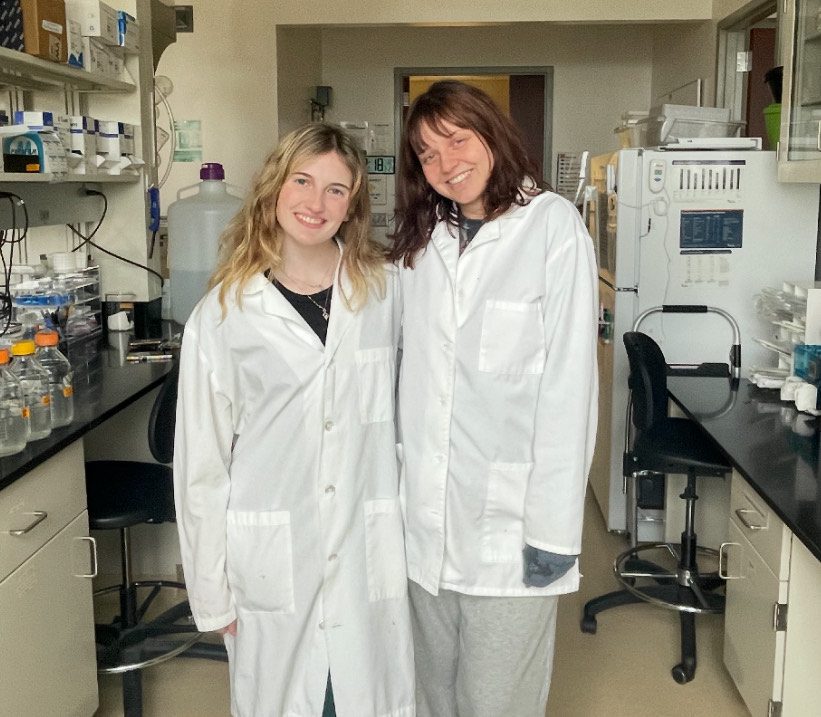
Our students aren’t waiting to make an impact. See how they’re leading research alongside expert faculty in state-of-the-art labs.
Our faculty understand what it takes for living systems to thrive and bring that same insight to student success. Their dedication to research and mentorship is moving the field forward, preparing the next generation of scientists to lead it.
– Dan Janies – CIPHER Co-director
The M.S. in Bioinformatics at Charlotte prepares you to lead in a fast-growing field, combining data, discovery and hands-on research experience to solve complex problems and create meaningful change.